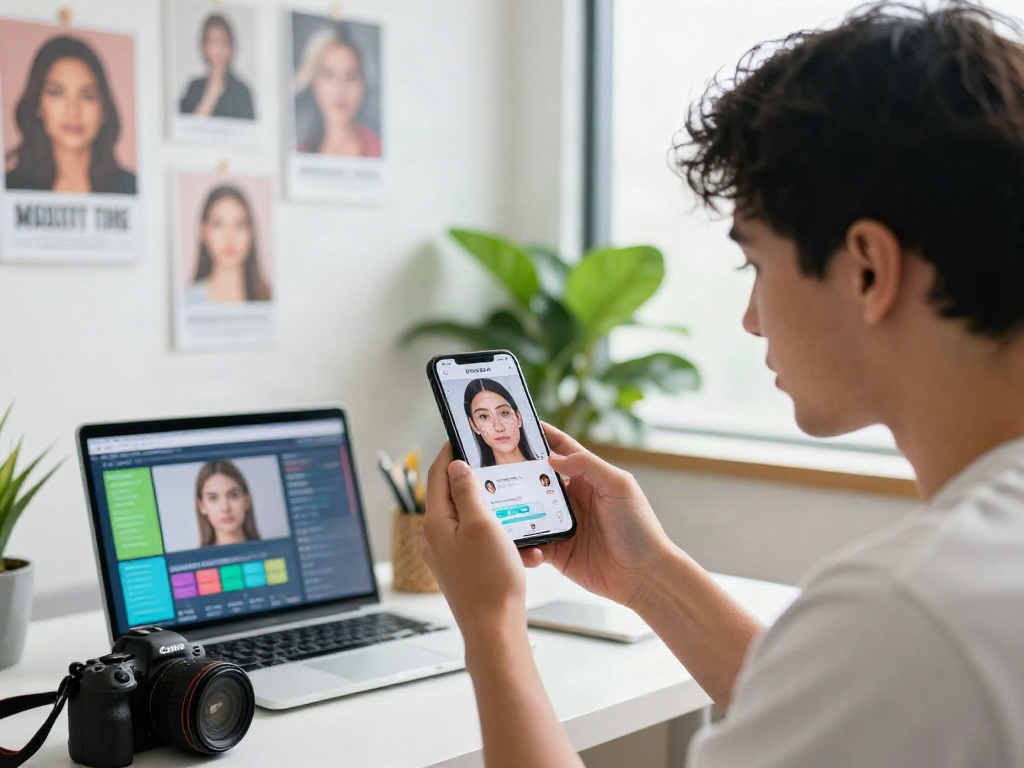

Understanding Facial Age Estimation: The Science Behind It
Facial age estimation has garnered significant interest over the years, especially with technological advancements in artificial intelligence (AI) and image processing. These tools allow individuals to explore the intriguing question of how old do I look based on their facial features. Understanding the science behind these estimations not only satisfies curiosity but also raises fascinating discussions about societal perceptions of age and beauty.
What is Facial Age Estimation?
Facial age estimation is a computational approach that assesses an individual's perceived age using their facial characteristics. This technology analyzes various features such as skin texture, wrinkles, and facial tone to produce an estimated age. By leveraging machine learning algorithms trained on numerous facial images, these tools can provide insights that combine subjective views with quantitative data.
How Old Do I Look? The Technology Explained
The algorithms behind age estimation tools are built on deep learning frameworks, which allow them to understand and interpret complex patterns in facial images. By applying convolutional neural networks (CNNs), these systems can recognize specific aging markers like sagging skin and crow's feet, creating a highly accurate age prediction model. The integration of neural networks with vast datasets ensures that the age estimations are reflective of real-world observations.
The Impact of Factors on Age Perception
Several factors contribute to how age is perceived beyond just biological age. Elements such as lifestyle, environment, and even cultural background play a significant role in the aging process and how it is recognized by others. For instance, individuals who engage in sun protection, maintain a healthy diet, and avoid smoking often exhibit features that are perceived as younger than their chronological age. Additionally, cultural standards regarding beauty and age influence individuals' self-perception and societal acceptance.
The Role of AI in Age Prediction
Artificial intelligence has revolutionized the field of facial age estimation, enhancing the precision and efficiency of predictions. The use of AI not only automates the analysis but also continuously learns from new data to improve outcomes, making it a dynamic tool in personal assessments of aging.
How AI Analyzes Facial Features
AI analyzes facial features through intricate algorithms that assess pixels and patterns within uploaded images. By breaking down a photo into its components, these algorithms can detect and interpret the geometric shapes of facial landmarks, such as the eyes, mouth, and brow line. The data collected from these analyses are used to compare the subject's facial features against a vast pool of data derived from diverse age groups, leading to a more accurate determination of facial age.
Real-World Applications of Age Estimation
The applications for age estimation tools extend across various industries, including marketing, skincare, and health. Brands often utilize these tools to tailor products to specific age demographics, ensuring that marketing campaigns resonate with their target audience. Additionally, in the beauty and healthcare sectors, understanding perceived age can help create customized skin and wellness plans based on individual needs.
Future Trends in AI Age Prediction Technologies
As we look forward to 2026 and beyond, advancements in AI technologies promise even more sophisticated facial age estimation capabilities. Upcoming trends may include enhanced personalization, where predictions are tailored not only based on facial analysis but also consider factors such as mood and recent lifestyle choices. Moreover, developments in augmented reality could enable real-time age visualization, offering users immediate feedback on their perceived age during video calls or social media interactions.
Using Age Estimators: Benefits and Drawbacks
Despite their popularity, age estimators are not without their pros and cons. Understanding these aspects can help users make informed choices about how and when to utilize age estimation tools.
Why Do People Want to Know How Old They Look?
The desire to know how old one looks can stem from various psychological and social motivations. For many, it reflects an inherent curiosity about self-image and how they are perceived by others. Age estimators can provide validation for one's aesthetic choices or highlight areas of improvement, empowering users to embrace their age or adopt anti-aging practices.
Privacy Considerations with Photo Uploads
While age estimation tools often require the upload of personal images, privacy concerns are paramount. Users should be aware of the implications of sharing their images online and the potential for misuse. It is crucial to choose platforms that prioritize data protection and guarantee that images are not stored or used for purposes beyond the age estimation process.
Accuracy: How Reliable Are These Tools?
The accuracy of age estimators can vary significantly based on the algorithm used and the quality of the images uploaded. Research indicates that while these tools can provide a close estimation, they should be taken as one data point among many. Factors such as lighting conditions, makeup, and facial expressions can alter results, leading to discrepancies in age predictions.
Comparative Analysis: Top Age Estimation Tools
With the rise of multiple age estimation tools, it's essential to evaluate their unique features, usability, and user feedback to identify which suits individual needs best.
Review of Leading Apps and Websites
Several applications stand out in the age estimation sphere, each offering unique functionalities. For instance, FaceAge.ai and Fotor both provide instant age predictions through simple photo uploads and come with user-friendly interfaces. Other apps like BeautyPlus emphasize entertainment alongside accuracy, appealing to younger audiences who enjoy interactive features.
User Experiences: What People Are Saying
User feedback varies widely; while many appreciate the novelty of these tools, others express frustration over inconsistent results. Satisfaction levels often correlate with the understanding of the tool’s limitations and the context in which the results are used. Many users enjoy sharing their results with friends, turning age estimation into a light-hearted activity.
Choosing the Right Tool for You
When selecting an age estimator, consider what you hope to achieve. If accuracy is your priority, opt for applications known for their robust algorithms and user testimonials. Conversely, for entertainment purposes, more casual and fun-based applications may suffice.
Best Practices for Using Age Estimators
Maximizing the benefits of age estimators requires understanding how to use these tools effectively.
How to Get the Most Accurate Estimate
To receive the most accurate age estimates, ensure that the photo you upload has proper lighting and a clear view of your face. Avoid filters or heavy makeup, as these can hinder the algorithm’s ability to detect true facial features. Additionally, take notes on how varying elements impact the age estimation and compare different tools for reliability.
Common Misconceptions about Age Prediction
Many individuals harbor misconceptions about the accuracy of age prediction tools, assuming they provide definitive answers. It is crucial to approach results with a level of skepticism, understanding that these tools offer estimates rather than facts. Remember that facial appearance can be influenced by a multitude of factors, and results should be regarded as part of a broader self-assessment journey.
Future of Facial Age Estimation in Everyday Life
The integration of facial age estimation tools into daily life is set to expand further in the next few years. From skincare recommendations to personalized lifestyle advice, the applications of this technology will likely deepen our understanding of aging. As discussions around beauty standards evolve, these tools may play a pivotal role in redefining how we perceive age and attractiveness.
What factors influence perceived age?
Factors influencing perceived age include genetics, lifestyle choices, environmental factors, and emotional well-being. Each of these elements can drastically affect how individuals present and perceive aging, making it a complex interplay rather than a static calculation.
Are age estimation tools accurate for everyone?
Age estimation tools may not be universally accurate due to diverse factors, including ethnic background and individual skin types. Algorithms trained on predominantly Western images may yield less reliable results for individuals from different cultures.
How often should I use age estimators for best results?
Frequency of use depends on personal interest. For regular assessments, consider using age estimators periodically—perhaps every few months or during significant life transitions—as a way to track changes over time rather than for daily self-esteem validation.
What are the ethical considerations of using AI for age estimation?
Ethical considerations include potential biases present in AI algorithms and privacy concerns regarding image data. Developers must ensure that these tools are equitable and that user data is handled transparently and ethically.
Will facial age estimation technology evolve in 2026?
Yes, advancements in AI and machine learning are expected to transform facial age estimation technology by 2026, fostering greater accuracy and user engagement through innovative features such as real-time feedback and personalized recommendations.